Yoslock leverages a self-developed multimodal identity framework that combines IoT, edge computing, and encryption to provide seamless access across various scenarios. Our multi-factor authentication and intelligent linkage ensure secure, efficient, and stable identity verification in residential, apartment, and hotel environments.
System Architecture and Operation
The Yoslock system is built around multimodal identity verification with a 'terminal device – network – cloud-edge' architecture. The terminal layer integrates facial recognition, QR code scanners, touch keypads, NFC readers, and smart control panels for front-end data capture and processing. The network layer supports Wi-Fi, BLE, and Zigbee, using MQTT to ensure low-latency, reliable communication and real-time data synchronization. The cloud-edge platform combines identity authentication, access management, and data processing, utilizing edge computing to improve response times and enable offline operation. It also enables user management, device monitoring, access logs, and remote control — together forming a stable, efficient, and scalable intelligent access system.
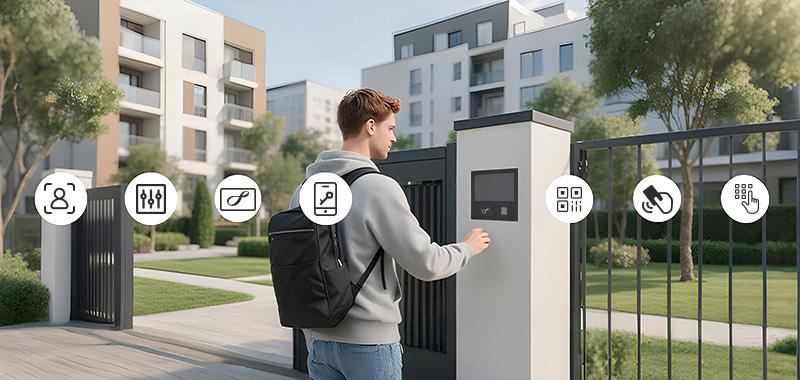
Multimodal Identity Recognition
Facial Recognition
The system captures 3D facial models using structured light and infrared, extracting 128-dimensional features via CNN. Liveness detection combines micro-expressions, infrared patterns, and reflectance to prevent spoofing. Recognition occurs locally or in the cloud, supporting low light, side profiles, and masks, enhancing security and reliability in various conditions.
App Key Authentication
Local key pairs are generated within the mobile device's Trusted Execution Environment (TEE) using biometrics (fingerprint or iris) or a device-unique ID, enabling passwordless authentication with FIDO2. A short-lived token is securely transmitted via NFC or BLE. Elliptic Curve Cryptography (ECC) facilitates key exchange and real-time session updates, ensuring data confidentiality and preventing identity forgery.
QR Code Recognition
The mobile app generates dynamic encrypted QR codes containing a unique ID, access permissions, timestamps, and SHA-256 signatures. Terminal devices decode these codes using industrial-grade modules with image enhancement and error correction. The decoded data is then locally verified against signatures and access rules to trigger actuators. This system is widely used for visitor appointments, temporary access, and similar scenarios.
Touch Keypad Password Recognition
A high-sensitivity mutual capacitive array detects touch signals, while filtering and anti-interference algorithms accurately map key positions. Passwords are AES-256 encrypted in a secure chip. The system supports one-time passwords (OTP), local key rotation, and time-limited passwords, making it suitable for two-factor authentication or offline emergency access.
Access Card Recognition
The system uses contactless RFID at 13.56 MHz, compatible with MIFARE Classic and DESFire cards. Authentication employs a three-way handshake with dynamic keys and symmetric encryption to ensure uniqueness. Permissions are synchronized in real time, supporting long-term identity verification for employees and residents.
Octopus Card Recognition
The system uses ISO/IEC 14443 Type A NFC (Near Field Communication), supporting MIFARE DESFire EV1/EV2 chips with triple symmetric encryption and dynamic key negotiation. Integrated with the Octopus interface, it enables card ID binding, balance recognition, and cross-platform access record synchronization. This technology is widely used in smart access systems in Hong Kong and Macau.
Smart Control Panel Authentication
The system integrates multiple identity modules and interfaces (NFC, BLE, Zigbee) with an ARM-based processor and access engine. It handles local data processing, access decisions, and peripheral control for locks, sensors, and elevators. Additionally, it supports edge caching, offline operation, and remote OTA upgrades.
Elevator Access Control
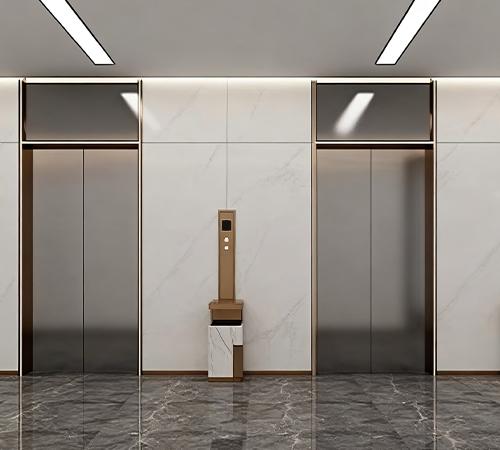
The elevator controller features an edge computing architecture and multi-protocol compatibility. It interfaces with mainstream elevator control systems via serial, CAN bus, or Modbus, enabling floor calling and access control.
The controller receives verification data from terminals such as facial recognition, QR codes, and access cards. The access engine then determines permissions before automatically triggering the elevator to the target floor.
The system supports time-based floor access, ensuring that employees or visitors can only reach authorized floors within designated periods. Users can also remotely reserve elevators via a mobile app, with the system automatically dispatching the elevator and pushing status updates. This functionality reduces on-site waiting times, effectively alleviating peak-hour congestion and enhancing overall access efficiency and safety.
Smart Mailbox Management
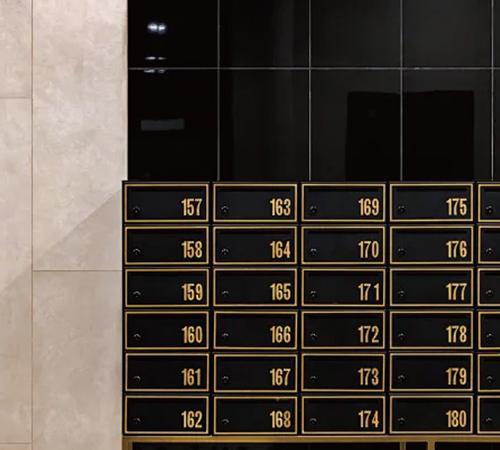
The mailbox controller is built on a low-power MCU architecture with a distributed communication model. It supports both centralized and distributed deployments and offers remote control and status monitoring capabilities.
Integrated with the mailbox system, the controller determines access permissions based on user identity verification and can implement scheduled unlocking policies to control delivery time slots. Each mailbox compartment is equipped with sensors or miniature infrared probes to detect mail delivery and retention, providing real-time reporting to the backend and user notifications.
The system supports mailbox operations via BLE, NFC, or a mobile application, ensuring convenience and data security. It is suitable for self-service package pickup, property-managed collection, and mail delivery, improving delivery efficiency while reducing management costs.
Multi-Scenario Control and System Integration
The Yoslock system is widely applicable in residential buildings, apartments, office towers, hotels, and other scenarios. It supports smart access needs such as elevator integration, parking identification, and mailbox unlocking.
The system features multi-role access management (for residents, visitors, property staff, etc.), enabling automatic elevator operation, door control, and delivery permission notifications upon identity verification. This significantly improves operational efficiency and user experience. Additionally, it provides open API and SDK interfaces, which are compatible with mainstream property management systems, building automation platforms, and third-party smart devices (e.g., ASSA ABLOY, Yale).
The system supports remote device management, bulk permission configuration, OTA updates, and unified control across multiple projects. This makes it suitable for rapid deployment in both new constructions and renovation projects, helping clients achieve intelligent access management upgrades.